Taking a Look at Queer Films through Reelout Queer Film Festival
Introducing the Reelout Queer Film Festival
The Reelout queer film + video festival was originally established as a working group of the Kingston OPIRG in 1999. Reelout Queer Film Festival 2020 was held at the Screening Room in Kingston, Canada from January 30th to February 8th 2020. There were nineteen films shown, with a range of genres and times. The films were created by ten different countries including some Canadian producers. There was a diverse range to choose from, as each film seemed to have individual plots with different significance. The Screening Room is an independent movie theatre which is iconic and welcoming, which makes it the perfect location for the Reelout Queer Film Festival to be held.
The film festival had a progressive atmosphere which could be felt from the moment of entry to the end of each film. On arrival the ticket was exchanged for a button/bead for the entry of the film, this was a lovely touch and change to the ordinary paper ticket and also encourages sustainability. Prior to the film being displayed a few speakers introduced themselves, their pronouns and spoke of how this film festival had come about. It was interesting and enlightening to see people so passionate about the film industry. They spoke of how films are a way of expression, art and a way of inclusiveness. This film industry has people dedicated to creating new ideas and helps with opening people’s perspectives on marginalized groups.
The importance of having a queer film festival is that it creates a safe space for not only the queer community who produce the films, but also the viewer community. A queer film festival provides representation and diversity within these films. The importance of representation in films is critical for audience members who identify as straight or queer because it works towards the normalization of queerness and the LGBT community. Queer films allow for the LGBT community to be shed in a positive light so that the negative stigmas of queerness are abandoned and replaced with acceptance and normalization. The queer film industry is considerably underground when compared to mainstream Hollywood movies. This could be in part to being smaller-budget movies that are screened through independent film festivals. Although these films do not rack up millions in the box-office, it is important to give notice and recognition to the crucial work that these communities are doing through film festivals. If queer films were given the same global recognition that Hollywood movies are, it would bring widespread attention to the issues that the LGBT community are working to change. As viewers, we can partake in giving these films the recognition they deserve by seeing them and giving them good ratings. Doing so will support the LGBT community and work towards their goal of normalizing queerness in films and furthermore in all aspects of life.

Reelout Film Festival’s Good Kisser
Avi Cronin
20090863
GNDS 125
TA: Alexis Robillard
Due Date: Feb 13th, 2020
Reelout Film Festival’s Good Kisser
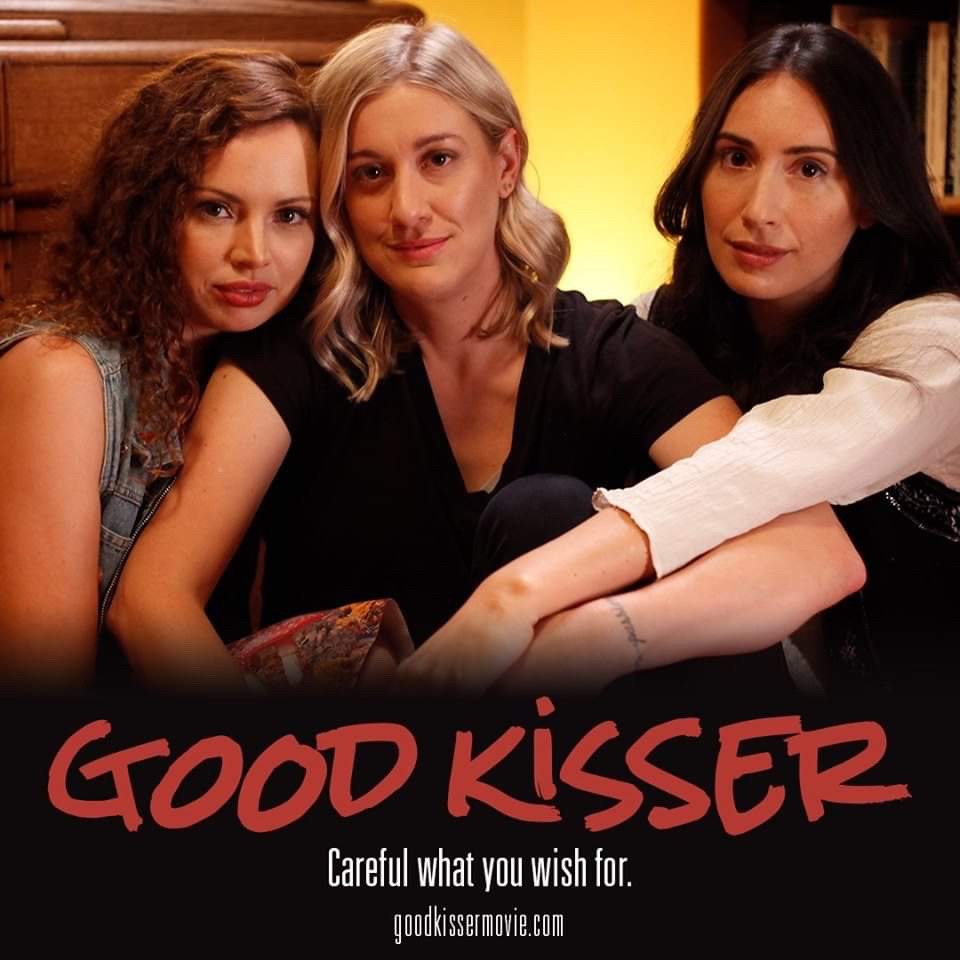
In this essay I will be writing a film review of Good Kisser, directed by Wendy Jo Carlton, where I will include a summary and overall analysis of the film, Within this review I will discuss the ways in which the overall theme and presentation of this film connect to intersectional theory. The film Good Kisser was screened through the Reelout Film Festival 2020. This particular film was about a couple who revealing the flaws in their relationship when they decide to have a night where they experiment with another woman. This film is part of the queer film festival because the couple is a lesbian couple that invite a third-party individual as a night fling who is also a queer woman.
The majority of this movie takes place over the course of one thrilling night. The couple, Jenna and Kate decide to open their relationship to the mysterious Mia. Kate is keener on the idea of trying this new twist to their relationships. Jenna is hesitant and expresses her concerns and worries to her trusted partner Kate who only reassures her that everything will be fine. Kate and Jenna arrive at Mia’s house, where the adventurous night begins. Mia has a very confident demeanor about her which she uses to her advantage to make Jenna more comfortable. As the night develops, there is drinking, party drugs, storytelling, flirting, and dancing. Mia is very flirtatious with both women but begins to give Jenna more attention. This exposes a problem because Kate becomes jealous revealing that Kate is in fact very interested in Mia and not her girlfriend Jenna. At this point in the film, sexual advances have been made by Mia and Kate. Jenna once again gets nervous and seeks comfort in her girlfriend for reassurance that if these women are to have sex, that Kate will be there for Jenna. Eventually the women all end up in the bedroom and engage in sexual intercourse where initially things go awry for Jenna just as she had feared. Finally, it has become clear to Jenna that Kate is into Mia as more than just a causal one-time hookup. Jenna confronts Kate about this, and Kate confesses to Jenna that she has been seeing Mia for a while, which leads to Jenna becoming upset and deciding to leave. Mia asks after Jenna, realizing what has happened between the couple as she was under the impression that Kate had told Jenna about their relationship, hence why Jenna had agreed to this night. Mia feels terrible as she had never had any intention to hurt Jenna. In an even bigger turn of events, throughout the night, Mia had grown very fond of Jenna and had come to like her more than she had planned. This love triangle went from Kate and Jenna being in a dating relationship to Kate having feelings for Mia to Mia having feelings for Jenna.
In terms of being a queer film, the film Good Kisser had representation and the production team did an excellent job of normalizing a queer relationship. This film was intersectional in the aspect that it was inclusive of women and homosexual relationships. That being said, that was ultimately all those were the only interlocking systems of oppression. There was no true sense of diversity representation. The three main characters were all middle-class white females. There was a lack of ethnic, race, and religious diversity. In his article, Intersectionality for Beginners, Peter Kaufman attempts to clarify the, sometimes complex, theory of Intersectionality. TO help the readers understand, Kaufman references both Kimberlé Crenshaw who coined the term, and Patricia Hill Collins. He writes in reference to both women quoting Crenshaw stating, “There are countless individuals who experience oppression in society because of the cumulative and intersecting effects of “racism, sexism, class oppression, transphobia, able-ism and more”’ (Kaufman, 2018). Understanding the broad spectrum of all the interlocking systems of oppression allow us to see that in this film, the theory of intersectionality was present, but it was a very limited view. The Good Kisser seemed to almost exclusively focus on the fact that the individuals involved in the relationship were females. Although it is very important to give recognition to and create films that are oriented towards representing the queer community in order to normalize homosexual relationships, this film seemed to capitalize on that aspect alone. This film could have been more intersectional if some of the cast were people of colour or of different religions. In all fairness, this film was a queer film for a queer film festival so technically it fit the guidelines. On a more positive take of this film, the director did an excellent job of normalizing lesbian sex. In a lot of film and media, sex between women is often looked at as a fetish for men and created specifically for a male audience. This is because of an issue called queerbaiting. As explained by Bea Mitchell in her article, Queerbaiting: What is it and why is it Problem?, she reveals, “By adding homoerotic subtext or erotic tension between two characters, usually leads, LGBTQ audiences are enticed to tune in, unaware that there was never an intention to elevate the subtext to an actual relationship” (Mitchell, 2018). Queerbaiting is an issue because it does not actually represent the LGBT community and it can be offensive because it is using queer sexuality to capitalize in the box-office and increase views. This can lead to lesbian sex being sold as a fetish to men which goes against the attempts to normalize queerness in society. This film is not queerbaiting as it normalizes lesbian sex does follow through with the homoerotic subtext.
Although the Good Kisser was very good at representing the queer community in the film industry and normalizing homosexual relationships, it was not as intersectional as it could have been. This film focused mainly on the queer aspect which can help to remove the stigma that surrounds the LGBT community not only within the film industry but also in real life society.
Word count: 1009
Citation References:
Kaufman, Peter. “Intersectionality for Beginners.” Everyday Sociology Blog. W.W. Norton and Company, 2018, www.everydaysociologyblog.com/2018/04/intersectionality-for-beginners.html#more.
Mitchell, Bea. “Queerbaiting: What is it and why is it a problem?” PinkNews, 2018, www.pinknews.co.uk/2018/02/26/what-is-queerbaiting-everything-you-need-to-know/.
Reelout Film Festival: Orpheus’ Song
Sophie Hobson
20198238
GNDS 125
TA: Alexis Robillard
Reelout Film Festival Orpheus’ Song
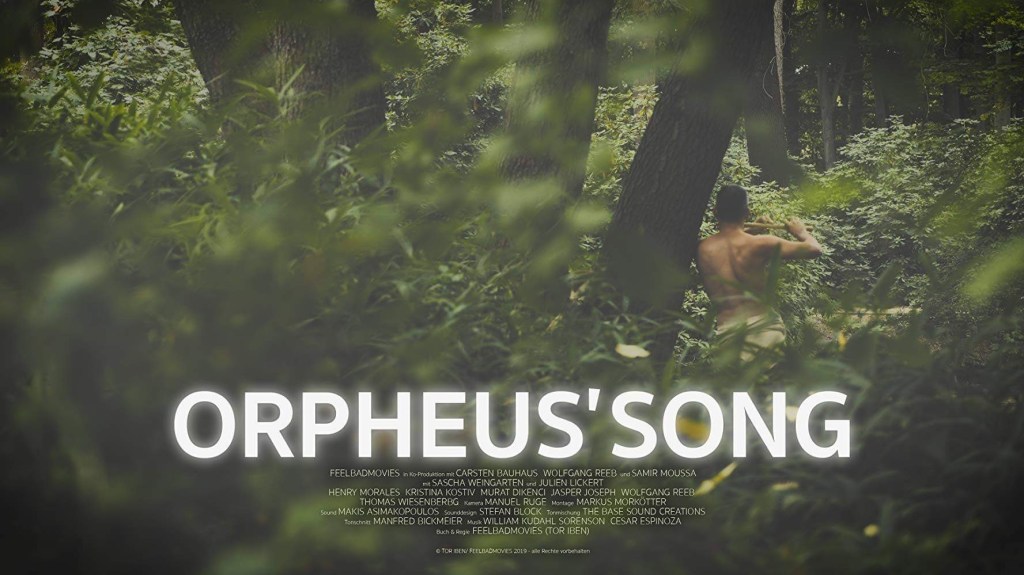
Orpheus’ Song (2019) directed by Tor Iben was a predictable film. Aspects of the film can be excused as it was relatively low budget however the film lacks a compelling story line.
Orpheus’ Song was released in 2019, the film starts by building a friendship between Philipp, played by Sascha Weingarten and Enis, played by Julien Lickert. Both seem dedicated to the gym which is where they seem to spend a lot of time together. As their friendship progressed through the film the audience is quickly introduced to Enis girlfriend Katrina, played by Kristina Kostiv. Kristina plays the role of a seductive woman, the dynamic of Philipp and Enis’s relationship intrigues Katrina however she is only fascinated not threatened (Schippers 88). Philipp wins a holiday to Greece, which he invites Enis along. Enis is at first reluctant to go on the trip as he has university work unlike Philipp who has little commitments. During their holiday they decide to go for a scenic walk, where they get lost. This test their friendship dynamic, highlighting the proposed power roles. As they are becoming frustrated with one another they bump into a mystical character, Hercules played by Henry Morales. Hercules welcomes Enis and Philipp into his cave where they sleep the night and Enis and Philipp have a life changing experience trying to find their way back to their hotel. The scenic walk that had them lost in Greece will change their lives forever.
Orpheus’ Song could do with some improvement from the beginning the story line was predictable and tedious. The relationship between the Enis and Philipp seems to be a way to queerbait the audience. There is sexual tension between the friends, however Enis still seems oblivious to this throughout the film. Although this film is a part of Reelout Festival which is supposed to be inclusive of LGBTQI the film almost displays Philipp and Enis romantic friendship as forbidden. This concept could have been purposeful for the viewer to be more intrigued into the friendship of Enis and Philipp however it could also seem forced between the actors, seemed though Philipp was more direct with his actions towards Enis. To balance out the queer dynamic Tor Iben uses Kritina’s character as a male gaze (Oliver 453). Krisitna plays as a beautiful, seductive strong young woman however she still craves male attention. Her job during the film is to take model photographs in what is described as nightwear. The anticlimax plot felt unrealistic. Throughout the scenes of Philipp and Enis being lost in the forest they do not seem to be panicked or worried about their situation in fact it seems normal for them to sleep in the forest whilst lost with little water. When they meet Hercules they follow him into his cave without second thought and do not seem though they are frightened to be lost in Greece forest that they have ever been to before. What was also unusual is that during the scene that they meet Hercules they first ask him to take them to the nearest village and the location of where their hotel might be but then the next scene jumps to them in Hercules cave. They followed him to the cave where Hercules lives, and they don’t question why Hercules has taken them there when they specifically asked to go to the nearest village. This part of the plot was rushed, unrealistic and confuses the audience.
Although there are a few downfalls to the plot, the making of Orpheus’ Song was blameless for a low budget film. The cinematography was succinct, many scenes had radiant scenery. The camera angles ameliorated the plot, highlighting the impressive scenery found in Greece. Appreciation for the set and the use of lighting throughout both city and forest scenes highlighted the beauty of the country. The music choice throughout the film was suitable for each scene and the projection of the actor’s voices were heard sufficiently. Specifically, the scenes in the forest had successful music and sound, these helped develop a tone to the environment which was enchanted and mystical. The sound in the waterfall scene helped create a place and set the tone of the upcoming events. Sascha Weingarten and Julien Lickert acting skills helped support this film. Both were successful in creating a bond together that was portrayed very realistic through the screens. As a viewer you could feel the connection between the two friends and this helped with the progression of the plot. Henry Morales created a mystical character who was unusual and engaging to the audience. His acting skills created a character who was significant through the engagement of the audience and the forest scene and could feel that his creepy body language directly.
Overall, Orpheus’ Song was mediocre. Fortunately, the production of the film and acting helped give some hope to Orpheus’ Song. It was a shame that the plot lacked excitement and was unworkable with the potential of actors Sascha Weingarten, Julien Lickert, Henry Morales and Kristina Kostiv.
Word Count: 836
Reference:
Schippers, Mimi. “Recovering The Feminine Other: Masculinity, Femininity, And Gender Hegemony”. Theory And Society, vol 36, no. 1, 2007, pp. 85-102. Springer Science And Business Media LLC, doi:10.1007/s11186-007-9022-4. Accessed 13 Feb 2020.
Oliver, Kelly. “The Male Gaze Is More Relevant, And More Dangerous, Than Ever”. New Review Of Film And Television Studies, vol 15, no. 4, 2017, pp. 451-455. Informa UK Limited, doi:10.1080/17400309.2017.1377937. Accessed 13 Feb 2020.
Reelout Film Review: Mark Patton – The ‘Scream King’ of Hollywood
Vicky Zhang
GNDS 125
TA: Alexis Robillard
February 13, 2020
Reelout Film Review: Mark Patton – The ‘Scream King’ of Hollywood
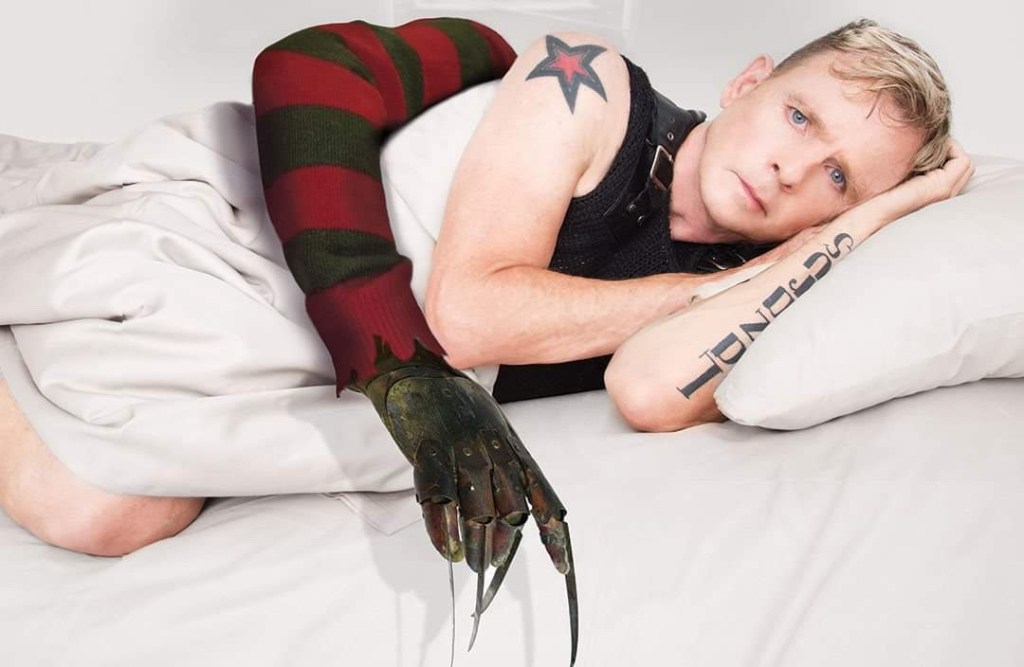
Scream Queen! My Nightmare on Elm Street (2019) is a documentary that sets the records straight about the controversial sequel to the film A Nightmare on Elm Street 2: Freddy’s Revenge (1985), which ended Mark Patton, the film’s closet star’s acting career, just as it was about to begin. The backbone of Scream Queen is provided by Patton’s wild ride, as it follows Patton as he travels to horror conventions across the U.S., makes the documentary fascinating, educating, and entertaining. Scream Queen! My Nightmare on Elm Street highlights Patton’s time in the horror spotlight and explores his rise to fame, subsequent disappearance from the public eye, and eventual reclamation of his queer cult figure legacy.
In 1985, Mark Patton was a 25-year-old aspiring actor who was about to enjoy his big break. He had been cast as the leading actor in the sequel to 1984’s blockbuster slasher hit A Nightmare on Elm Street 2: Freddy’s Revenge, written by David Chaskin and Wes Craven, directed by Jack Sholder. For Patton, it was a dream come true. Little did he know, his career would be over just as quickly as it began. At the time of the film’s release, The Advocate dubbed 1985’s A Nightmare on Elm Street 2: Freddy’s Revenge the gayest horror film ever made, but according to the film’s production, Freddy’s Revenge was never intended to be explicitly gay. Everyone who participated in the production of the film claimed they were simply making a sequel that took the franchise in a different direction. Later, Mark Patton claimed that he was essentially thrown under the bus when homophobic fans complained about his effeminate “scream queen” performance. Meanwhile, screenwriter David Chaskin and director Jack Sholder denied any awareness of the underlying queer themes (Chaskin has since admitted that he actually beefed up the subtext in rewrites throughout shooting). For Mark Patton, such a tag was a stark reminder about the homophobia in Hollywood in the 80s, and the painful experience he had making the high-profile film and living through the polarizing critical aftermath as well as the devastating AIDS epidemic.
Scream, Queen! takes its double-meaning title from the classic horror trope of the female victim-hero or Final Girl, a term used to describe the solo female survivor who either lives long enough to escape from or kill the monster/killer in a slasher film. (Clover 201) As the first male scream queen, or “final boy,” Patton’s character Jesse was quite a radical presence onscreen at the time. Freddy’s Revenge effectively outed the young actor. However, the change in his reputation that followed dovetailed with the AIDS panic in Hollywood. On July 16, 1985, actor Rock Hudson joined his friend and former co-star Doris Day at a press conference announcing her new show. Emaciated and frail, Hudson was almost unrecognizable. That appearance, and the subsequent revelation that Hudson was gay and had AIDS, became a galvanizing moment in how the world perceived the disease. No longer was it an illness that struck only those on society’s fringes; it had ravaged a beloved screen star who for decades had represented the American virile ideal. (VOA News) Around the same time in the mid-1980s, Patton contracted HIV from his then-boyfriend, Dallas star Timothy Patrick Murphy, who passed away shortly after. The fallout from Freddy’s Revenge combined with the horrors of AIDS, Murphy’s death and his own diagnosis led his mental health to deteriorate. He almost did survive, but he held on long enough for the introduction of combination antiretroviral therapy. Patton then gave up acting, abandoned Hollywood, and relocated to Mexico. According to Jenn Brandt, the 1990s is marked as an important milestone in American television history. Ellen (1994–1998) was the first prime-time network sitcom to feature an openly gay lead actress and as well as character. Character Ellen Morgan, played by comedian Ellen DeGeneres, came out in the show in April 1997, which signaled not only a cultural shift in the acceptance of homosexuality but also paved the way for future shows and films featuring homosexual characters. (112) In this light, Mark Patton’s story is a vital piece of queer film history and a necessary reminder of how far we have come in the fight for gay liberation and history of homosexuality in American television as well as the Hollywood film industry.
Patton met and later married Hector Morales Mondragon in Puerto Vallarta where the couple owns and operates an art store. It was not until years later after he moved to Mexico, with the dawn of the internet, that Patton realized he had become retroactively famous to horror fans the world over. Just like that, he restarted his journey as the “scream king”. As mentioned earlier in this review, much of Scream, Queen! is focused on bad blood between Patton and Chaskin, the screenwriter of Freddy’s Revenge, who denied that the film’s themes were intentional, blaming Patton for taking the character in a different direction and making this a gay film. However, one could argue that David Chaskin used Queerbaiting in Freddy’s Revenge as a way to attract queer audiences. Bea Mitchell notes in her article “Queerbaiting: What is it and why is it a problem?” that Queerbaiting is a term refers to authors or writers attempting to attract an LGBTQ+ audience by hinting at same-sex relationships between characters, though they are never actually consummated. Despite this, Mark Patton clearly became the victim of David Chaskin’s Queerbaiting strategy because of its failure. In this documentary, Patton confronts the Freddy’s Revenge cast and crew for the first time. Although there was a lot of tension between Patton and Chaskin, they finally decided to meet and have a conversation. Chaskin apologized to Patton for the trouble he and Freddy’s Revenge had caused for him, and that “sorry” was the only thing Patton wanted from him all along.
The documentary discusses Freddy’s Revenge’s status as an LGBTQ+ cult classic and illustrates how the career turbulence experienced by Patton. “There were plenty of gay actors like me,” says Patton. “They starred in one movie and just disappeared. A whole generation just vanished.” The discourse of Hollywood’s homophobia back in the day is seen through the painful eyes of Mark Patton, a gay actor who went into hiding, until realizing he became a beloved gay icon amongst queer audiences. In this satisfactorily shot and structured documentary, Patton gets the final word.
Word Count: 1065
Work Cited
Brandt, Jenn. “‘As Seen on TV’: Gender, Television, and Popular Culture.” Gender and Pop
Culture: A Text Reader, edited by Adrienne Trier-Bieniek, Sense Publishers, 2014, pp. 103 – 120.
Clover, Carol. “Her Body, Himself.” Men, Women, and Chain Saws: Gender in the Modern
Horror Film, Princeton University Press, 1992, pp. 21 – 63.
Mitchell, Bea. “Queerbaiting: What is it and why is it a problem?” PinkNews, 28 February
2018,
https://www.pinknews.co.uk/2018/02/26/what-is-queerbaiting-everything-you-need-to-know/. Accessed 12 February 2020.
“Hollywood’s Rock Hudson Admits AIDS Diagnosis on This Day in 1985.” VOA News, 25 July
2017, https://www.voanews.com/arts-culture/hollywoods-rock-hudson-admits-aids-diagnosis-day-1985. Accessed 12 February 2020.
Scream, Queen! My Nightmare on Elm Street, directed by Roman Chimienti and Tyler Jensen,
USA, The End Productions, 2019.
A Nightmare on Elm Street 2: Freddy’s Revenge, directed by Jack Sholder, USA, New Line
Cinema, Heron Communications, and Smart Egg Pictures, 1985.
Follow My Blog
Get new content delivered directly to your inbox.
 Reelout Film Review